
WISHH partnered with the Cambodian Aquaculturist Association to connect Cambodian fish farmers to feed suppliers and new innovations at the Food and Agriculture Organization of the United Nation’s CAFE26 agricultural expo. Held in Phnom Pehn on October 23-26, the packed convention hall offered a unique training and networking opportunity for WISHH and its partners to share knowledge and introduce suppliers that use U.S. soybean meal in their feeds for fish, poultry, swine, duck and more.
WISHH used USDA Regional Agricultural Promotion Program (RAPP) funding to partner with CAA to bring the fish farmers to CAFE26 as well sponsor exhibits to promote quality fish from Cambodian companies that were part of WISHH’s USDA Food for Progress project. For example, Cambodian fish distribution business owner Yorn Samnang displayed quality fish products made with the solar dryer that he installed through a matching grant offered by WISHH’s USDA project. The solar dryer allowed him to triple productivity and market fish that help fill the growing demand for safe fish in Cambodia. His business has grown to offer about 30 different fish products. Samnang reports at least 10 other local fish companies have also adopted the solar dryers. WISHH partner Unica food company’s display at CAFÉ26 featured six new fish products that they have launched, including for Cambodia’s increasingly quality-and-convenience conscience market.
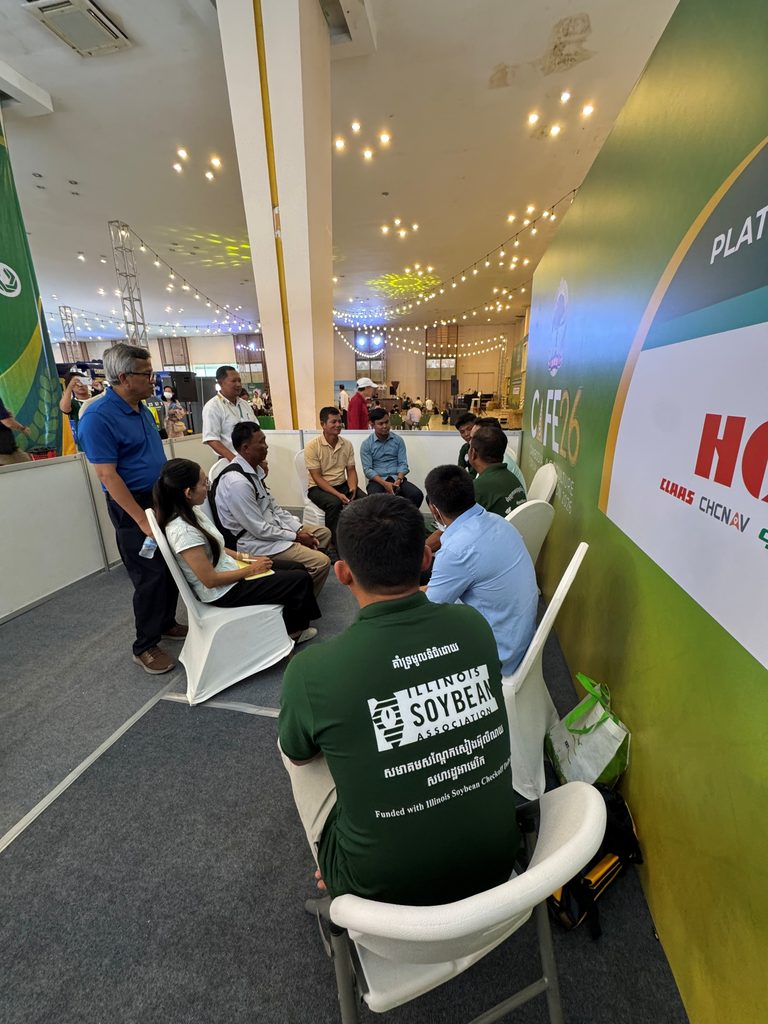
The CAFE26 exhibitors report growth and investment in the overall Cambodian animal agriculture sector that will increase market opportunities for U.S. soy in feeds for poultry, swine, dairy and fish. For example, a feed company is investing in a fish hatchery in Cambodia, which will provide an important new source of healthy fingerlings for the growth of Cambodian aquaculture. Additionally, representatives of Kirisu Farms and Moo Moo Farms had just returned from WISHH trade teams to Wisconsin where they gained information about the quality of U.S. soy for their herds. Both companies had steady traffic to their CAFE26 booths where they sold their fresh milks.
A 2025 USDA report referenced Cambodia’s General Department for Animal Health and Production (GDAHP) data that about 30 industrial feed mills operated in Cambodia in 2024 with a total designed capacity of 3.5 million metric tons. Meanwhile, Cambodia’s soybean meal and distiller’s dried grains imports in 2024 reached 173
thousand metric tons, up 6 percent over the prior year. USDA also reported that meat consumption in Cambodia increased by 14 percent between 2019 and 2023 to roughly 327,000 metric tons, including 165,000 metric tons of pork and 70,000 metric tons of poultry. Fish remains a dietary foundation at 76 percent of household protein intake and Cambodia’s second-most-consumed food after rice, according to the WorldFish organization. Cambodia included fish as a key component of healthy diets in its National Strategy for Food Security and Nutrition (2024–2028), a nationwide plan aimed at improving nutrition, food security and resilience. Further growth of the sector is projected as the government encourages fish producers to gain certification for “Good Aquaculture Practices”, which would require the use of pellet feeds.