
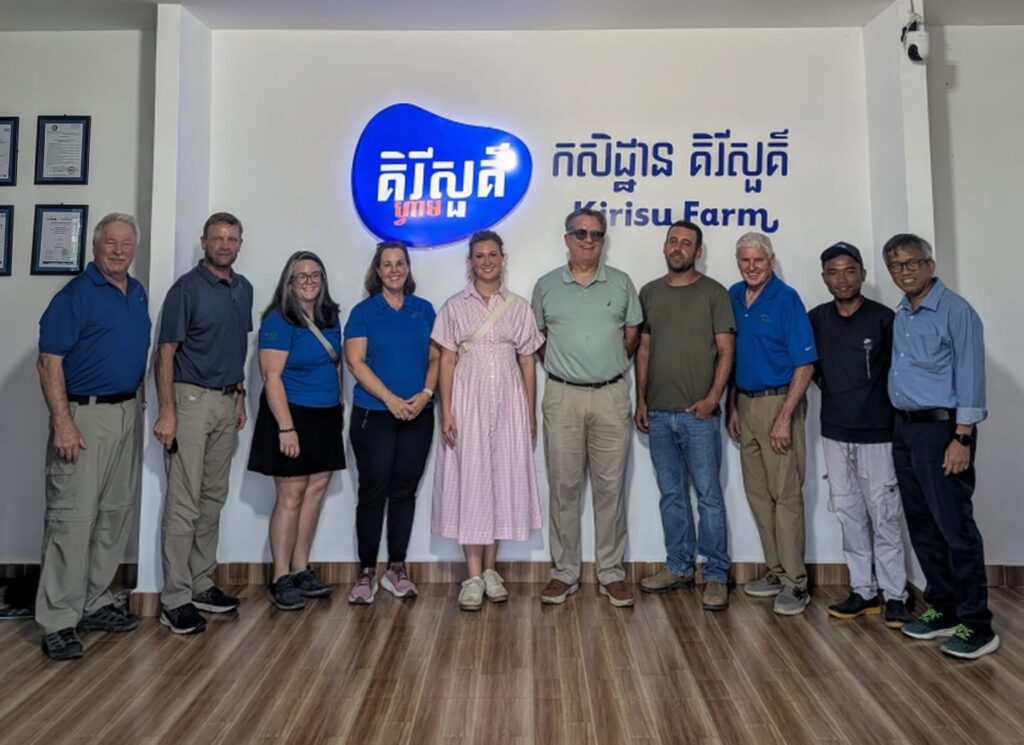
The ASA’s World Initiative for Soy in Human Health hosted a trade team to Cambodia this week led by WISHH Committee Chair Morey Hill, WISHH Committee Member Doug Darling, and ASA Director Josh Gackle. The trade team showcased how the groundwork laid through years of programming through WISHH’s USDA-funded CAST (Commercialization of Aquaculture for Sustainable Trade) project continues to create opportunities for U.S. soy in other sectors. While the recently concluded CAST project helped strengthen Cambodia’s aquaculture sector and promote the use of high-quality feed in fish production, WISHH’s work in the country continues to expand into other areas, including swine and dairy. The trade team members visited businesses across these value chains, highlighting the growing demand for feed and other products that can create opportunities for U.S. soy.
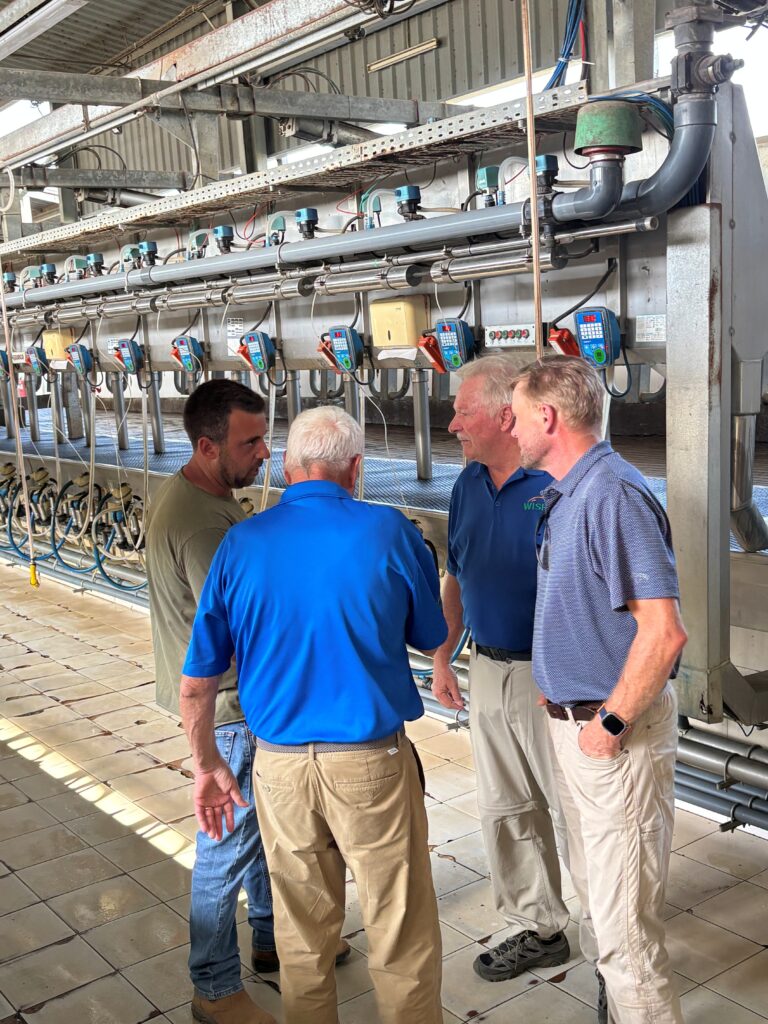
The trip included a visit to M’s Pig, a major player in Cambodia’s swine industry that produces its own feed, supplies meat to consumers and sells seedstock to other farmers. The mission also included a stop at also visited Agrimaster, which operates a feed mill just outside Phnom Penh producing 10,000 metric tons of poultry and swine feed per month and Cambodia’s first aquaculture feed mill. Additionally, at Kirisu Dairy Farm, the team saw a rapidly expanding 1,800-head dairy operation, while Unica showcased small-scale processing of fishery products with an output of approximately 600 kilograms per month.
Beyond facility visits, the team participated in the Livestock & Aquaculture Exhibition, met with leaders of the Cambodian Aquaculturist Association (CAA) and the Livestock Association, as well as visited an aquaculture farm.
Hill led the WISHH team with World Food Programme Cambodia. WFP hopes to partner with WISHH as it continues its work in Cambodia, particularly in school feeding.
“Together, our work can contribute to continued progress for Cambodia’s food security,” said Hill. “We want to see future success so more Cambodian children have access to affordable and safe fish. In turn, that demand will also increase demand for U.S. soy in these school meals. “